The Oxford Handbook of Latin American Social Movements
(Oxford University Press)
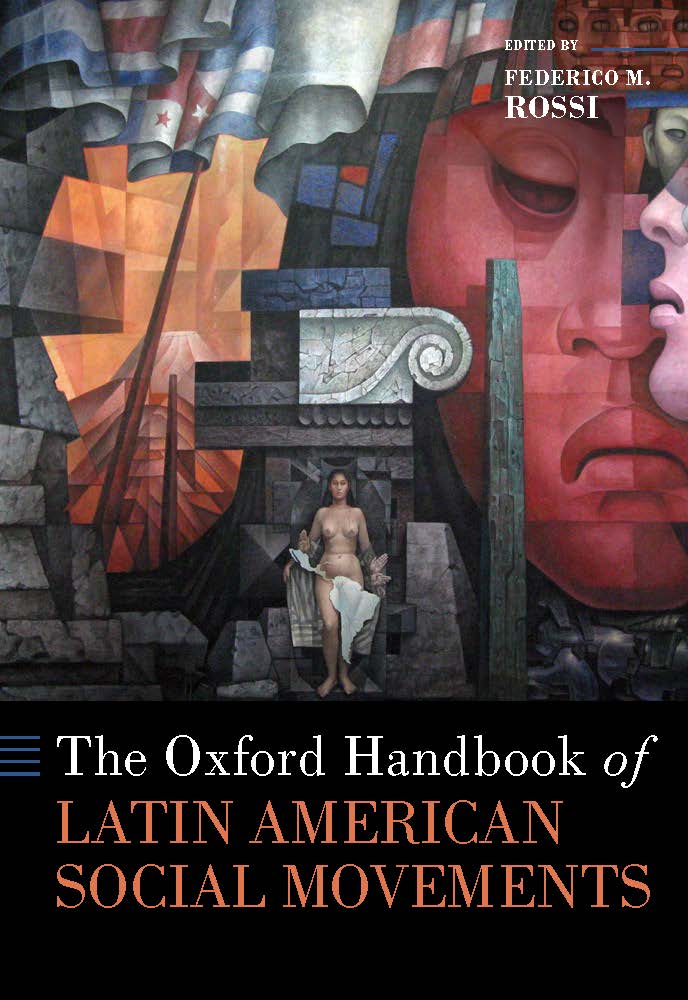
ABSTRACT
Since the re-democratization of much of Latin America in the 1980s and a regional wave of anti-austerity protests in the 1990s, social movement studies has become an important part of sociological, political, and anthropological scholarship on the region. The subdiscipline has framed debates about formal and informal politics, spatial and relational processes, as well as economic changes in Latin America. While there is an abundant literature on particular movements in different countries across the region, there is limited coverage of the approaches, debates, and theoretical understandings of social movement studies applied to Latin America.
In The Oxford Handbook of Latin American Social Movements, Federico M. Rossi presents a survey of the broad range of theoretical perspectives on social movements in Latin America. Bringing together a wide variety of viewpoints, the Handbook includes five sections: theoretical approaches to social movements, as applied to Latin America; processes and dynamics of social movements; major social movements in the region; ideational and strategic dimensions of social movements; and the relationship between political institutions and social movements. Covering key social movements and social dynamics in Latin America from the late nineteenth century to the twenty-first century, The Oxford Handbook of Latin American Social Movements is an indispensable reference for any scholar interested in social movements, protest, contentious politics, and Latin American studies.
The Poor’s Struggle for Political Incorporation
(Cambridge University Press – Contentious Politics Series)

Senator Sergio Leavy citing book in National Congress
ABSTRACT
This book offers an innovative perspective on the ever-widening gap between the poor and the state in Latin American politics. It presents a comprehensive analysis of the main social movement that mobilized the poor and unemployed people of Argentina to end neoliberalism and to attain incorporation into a more inclusive and equal society. The piquetero (picketer) movement is the largest movement of unemployed people in the world. This movement has transformed Argentine politics to the extent of becoming part of the governing coalition for more than a decade. Rossi argues that the movement has been part of a long-term struggle by the poor for socio-political participation in the polity after having been excluded by authoritarian regimes and neoliberal reforms. He conceptualizes this process as a wave of incorporation, exploring the characteristics of this major redefinition of politics in Latin America.
Reshaping the Political Arena in Latin America
(University of Pittsburgh Press – Latin American Series)
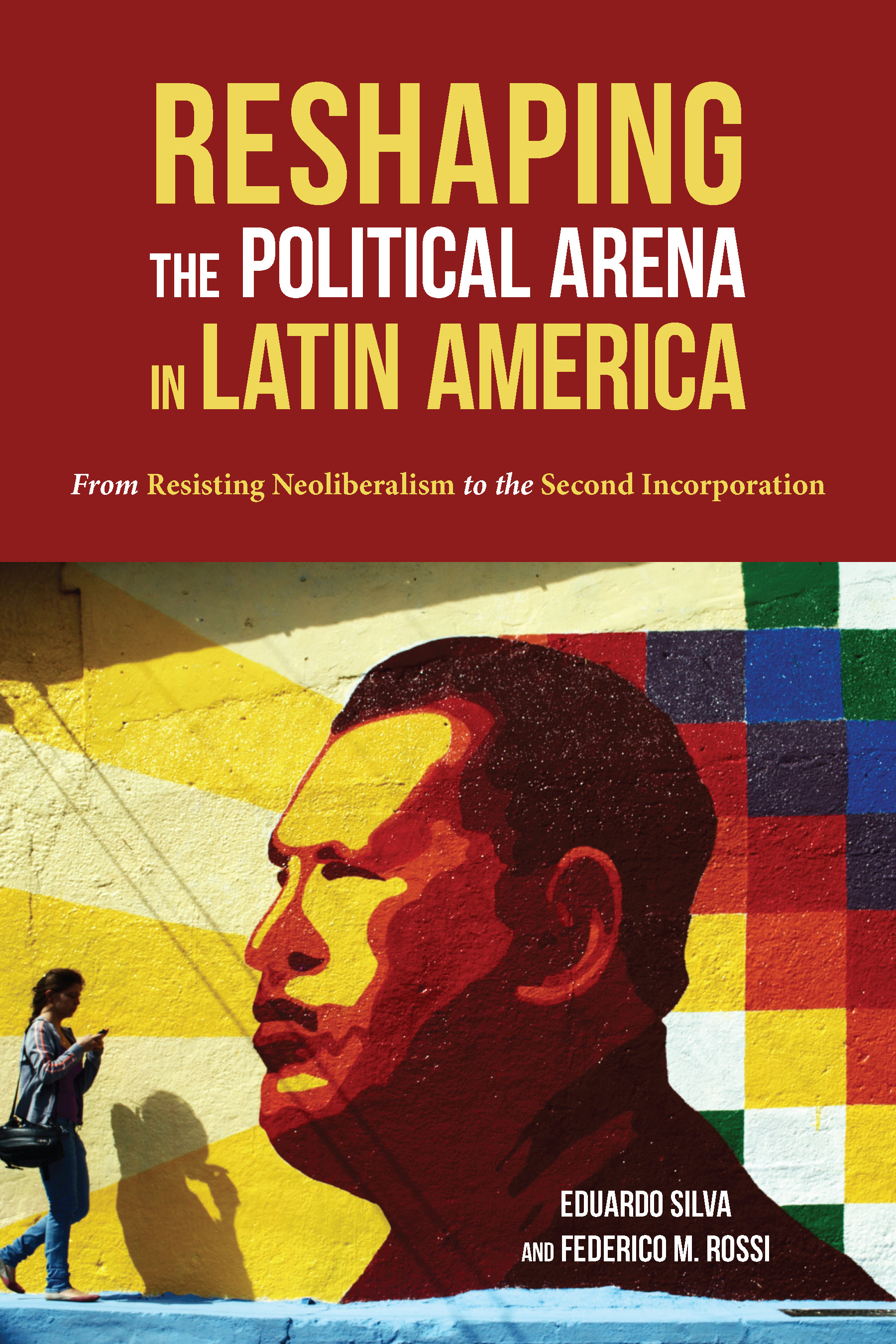
ABSTRACT
Market affirming economic, social, and political reforms in the last quarter of the 20th century reopened the “social question” in Latin America as expanding waves of popular sectors resistance to their exclusionary effects gripped the region. The resurgence of the left pushed the issue to the forefront. How were politically activated popular sectors to be reincorporated in the political arena? Following Ruth Berins Collier’s and David Collier’s classic Shaping the Political Arena (Princeton University Press, 1991) and Federico M. Rossi´s approach elaborated in The Poor’s Struggle for Political Incorporation (Cambridge University Press, 2017), this volume examines the question of the role played in the second wave of incorporation by political parties, trade unions and social movements in five paradigmatic cases: Argentina, Bolivia, Brazil, Ecuador, and Venezuela. The book analyzes the various forms of incorporation and posits the emergence of different types of popular sector interest intermediation between state and society.
Social Movement Dynamics
(Ashgate/ Routledge – Mobilization Series)
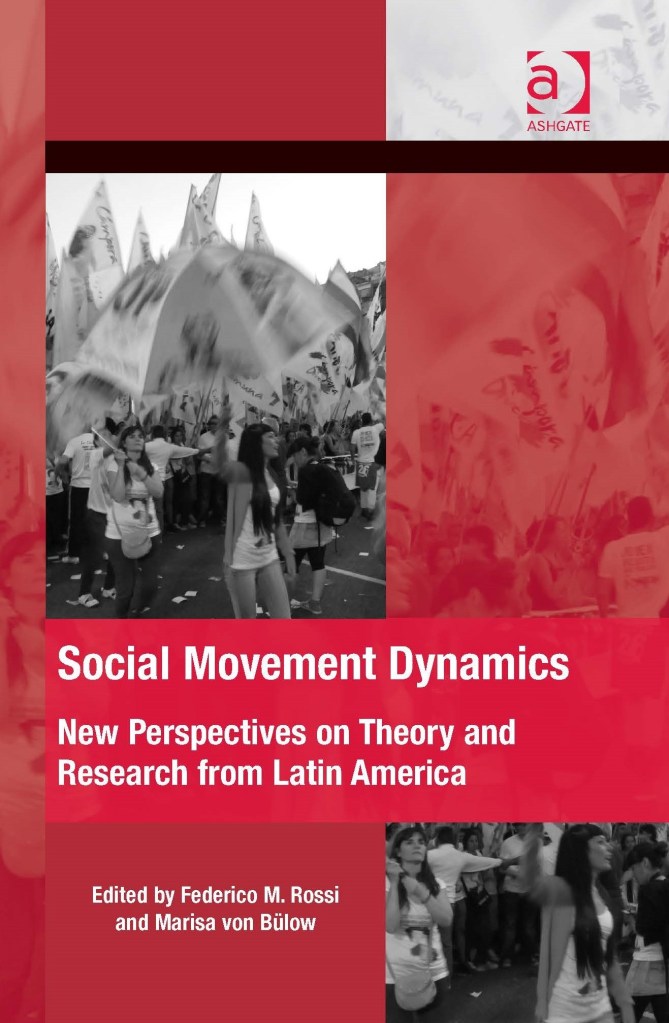
ABSTRACT
This book presents an overview of new approaches to the study of social movements emerging out of Latin America, based on original and innovative analyses of the recent changes in collective action across the region. Over the past decade, new repertoires of contention have emerged in parallel to changes in the configuration of actors, in previously established patterns of relationship between social movements and political institutions, and in the shapes of collaborative networks, both domestic and transnational. The authors analyze a broad set of countries and social movements, while focusing on three key theoretical debates: the interactions between routine and contentious politics, the relationship between protest and context, and the organizational configurations of social movements. The research agenda put forward by this book is neither defined nor restricted by geographical boundaries, even though the chapters are based on field research undertaken in Latin America. In doing so, this volume contributes to a still underdeveloped dialogue in theory-building in social movement studies, among scholars from the South and from the North, as well as among scholars specialized in different regions.
 Prof. Federico M. Rossi